COP 31: A Lesson from the First WTO Conference
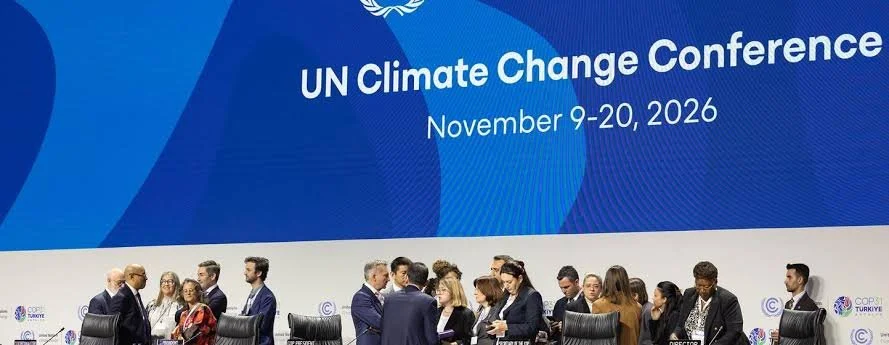
Nearly 200 countries fail to reach consensus in Antalya as divisions over fossil-fuel transition, historical responsibility and financial commitments expose widening gaps in global climate action. - Headlines
At COP31, countries failed to agree on a specific pathway to transition away from coal, oil and gas, or on how to share the financial burden of climate action. The impasse reminded me of the first World Trade Organization (WTO) Ministerial Conference in Singapore, held in December 1996. After days of intense negotiations, countries remained divided over whether to include environmental issues, labour standards and trade facilitation in the joint communiqué.
As negotiations stretched late into the night, the US Trade Representative handed the Indian Commerce Minister some hotel stationery lying on the table and asked him to draft a resolution acceptable to all. By midnight, they had worked out a compromise. Since the resolution deviated from the mandate given to the Indian delegation, the Commerce Minister sought oral approval from the Prime Minister. The approval paved the way for a joint communiqué and the successful conclusion of the conference.
A decade later, I could place this bold action as practice of ethical compromise: advocated by Professor Bish Sanyal in the context of growing uncertainties accompanying globalization.
In the 1990s, globalization was accelerating. Growing flows of trade, investment and ideas were connecting countries in unprecedented ways. This interconnectedness brought new uncertainties and unprecedented situations. Negotiators could no longer treat domestic mandates as immutable principles carved in stone. They needed to adapt.
The Indian Commerce Minister’s compromise reflected such adaptability. His experience in business, coupled with his temperament and outlook, enabled him to see the world not in black and white, but in shades of grey. He demonstrated a willingness to move beyond rigid positions, listen to opposing perspectives and find common ground.
At the first WTO Ministerial Conference, India softened its position on discussing environmental issues, labour standards and trade facilitation within the WTO framework. This trade-off helped break the deadlock and secure a joint communiqué, contributing to the establishment of a functioning multilateral trading system.
If we treat them as conflicts of principles, compromise becomes almost impossible. But if we see them as conflicts of interests, we can explore trade-offs. The risk is that compromise is often viewed as a sign of weakness, for as the philosopher, George Santayana said long ago, “Compromise is unacceptable to passionate natures because it seems a surrender; and to intellectual nature, it seems a confusion”. This is what the Commerce Minister had to face on return to India.
The lesson is simple but powerful: reframing conflicts of principles as conflicts of interests can create room for compromise. Yet this shift cannot be merely tactical. It must be ethical, reasoned and defensible. Knowing when to stand firm and when to compromise is ultimately a test of moral judgment.